Lately in my practice I’ve been using a lot of the Internal Family Systems model. There are many great theories in the field of psychology, in an earlier post I mentioned Cognitive Behavioral therapy. Today I’d like to share a little bit about IFS with you. Have you ever heard of IFS?
Have you ever caught yourself thinking, “Part of me wants to do this… but another part really doesn’t”? That phrase—part of me—might sound casual, but it’s actually more accurate than we realize.
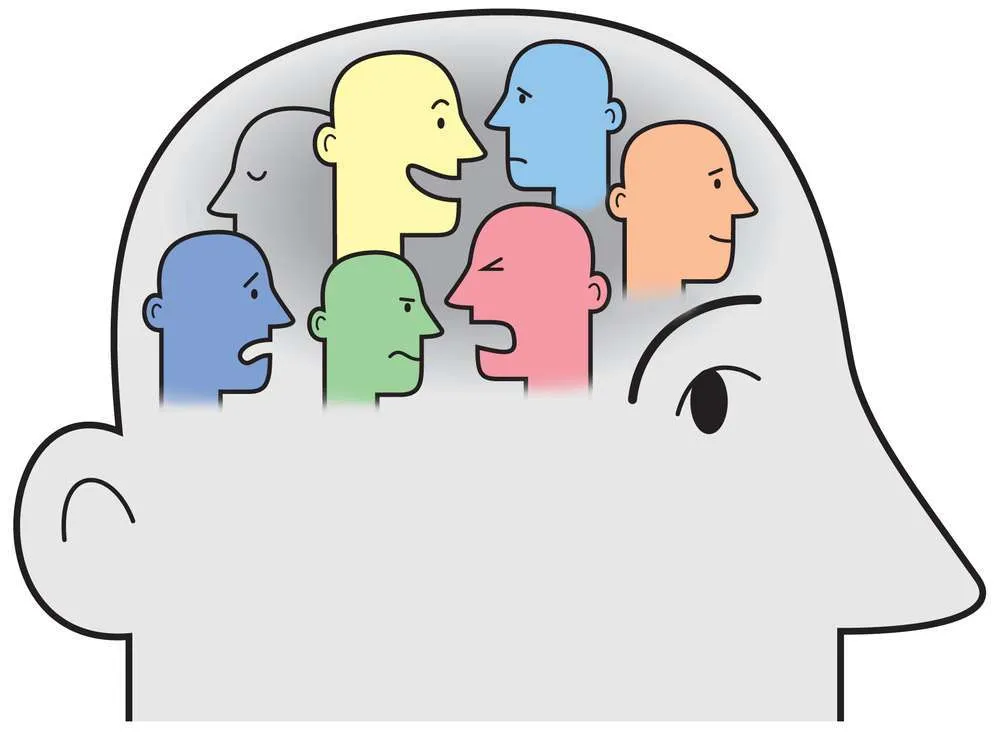
According to the Internal Family Systems model (or IFS), we’re not just one single, unified “self.” Inside, we carry a whole family of parts—each with its own thoughts, emotions, and intentions.
At first, that can sound a little strange. But when you think about it, it makes sense. We say things like:
- “A part of me wants to speak up, but another part wants to stay quiet.”
- “Part of me is angry, but part of me understands.”
Those parts are real inner voices—different aspects of us trying to keep us safe in their own ways.
The Protectors, Managers, and Exiles
IFS describes a few main kinds of parts:
- Protectors step in to manage or control what happens. They might look like perfectionism, overthinking, or people-pleasing. Their job is to prevent pain.
- Exiles are the parts that hold hurt from the past—shame, rejection, fear. They often get tucked away so we don’t have to feel the full weight of their emotion.
- Firefighters rush in when that pain starts to rise. They might distract us through busyness, scrolling, or numbing out. They’re not “bad”—they’re just desperate to keep us from hurting.
The beauty of IFS is that it helps us to meet each of these parts with curiosity instead of judgment. And that, my friends, makes ALL the difference.
Here’s what I love about IFS: it isn’t about silencing or “fixing” our parts—it’s about listening to them. Every part of us developed for a reason. And here is the kicker in my world….It doesn’t have to be from trauma. We ALL have parts. When we slow down, pay attention, and listen with compassion, something shifts. We begin to realize that underneath all those parts is something deeper—our Self.
In IFS terms, the Self is the calm, curious, and compassionate part. It’s the part of us that can hold everything else with love and wisdom.
From a faith perspective, I think of it like this: the Self is where the image of God shines through. It’s the centered place where the Spirit can lead and heal.
IFS invites us to see our inner world not as a battlefield—but as a community that can be restored to harmony.
When our parts feel seen, they relax.
When they’re led by compassion, they heal.
And when they heal, we do too.
So maybe today, take a quiet moment and ask yourself:
What part of me needs kindness right now?
You might be surprised at how much peace can come from listening within.
Interested in learning more? https://ifs-institute.com/
 Mental Health Mondays
Leave a comment