It’s a small word that carries a very big meaning.
Grief is a universal human experience. At some point in life, every person will walk through it. Yet even though it is something we all share, the experience of grief is never exactly the same. It varies from person to person and even from loss to loss within the same life.
In the 1960s, Elisabeth Kübler-Ross gave language to something many people were already feeling but struggling to understand. She proposed that grief often moves through recognizable stages: denial, anger, bargaining, depression, and acceptance.
For years, this was the model I taught from.
And to be fair, it helped. The stages gave people something they desperately needed in the chaos of loss—a framework. When life suddenly felt unpredictable and out of control, the idea that grief had some recognizable pattern, some roadmap to follow, gave people a sense that what they were experiencing was normal. It helped restore a bit of power in the midst of profound powerlessness.
But over the years, I began to realize something.
DABDA just isn’t enough.
Not when someone is living through deep, gut-wrenching loss.
True grief is rarely neat and orderly. It doesn’t politely move from one stage to the next like steps on a staircase, although that would be great. Instead, grief is messy. It’s like glitter, it gets everywhere. It’s not neat and tidy. You think you’ve got it all and then a random piece of glitter shows up. You find it in a random drawer. In places you expect and places you never dreamed the glitter would touch.
Grief circles back on itself.
It surprises you.
It shows up in moments you didn’t expect or don’t want.
Sometimes it appears in the quiet spaces—an empty chair, a familiar song, the smell of someone’s favorite food. Sometimes it shows up on a day you forgot to remember.
And sometimes grief is complicated because it carries so many emotions at once. Along with sadness there may also be relief, guilt, gratitude, longing, confusion, or even moments of unexpected joy. All of those feelings can exist together, even when they seem to contradict one another.
That doesn’t mean you’re doing grief wrong.
It means you’re human.
Over time, I’ve come to believe that grief is less about moving through stages and more about learning to carry love in a new way. When we lose someone or something meaningful, the love we had for them doesn’t disappear. It simply no longer has the same place to go.
So grief becomes the space where that love now lives.
From a faith perspective, grief also reminds us that love is never wasted. Scripture tells us that “The Lord is close to the brokenhearted and saves those who are crushed in spirit.” (Psalm 34:18). In the moments when loss feels overwhelming, we are not as alone as grief sometimes makes us feel.
Healing doesn’t mean forgetting.
It means slowly learning to live with the loss while still allowing life, love, and hope to grow around it.
And that kind of healing rarely happens in stages.
It happens one small step, one honest feeling, one deep breath, and one day at a time
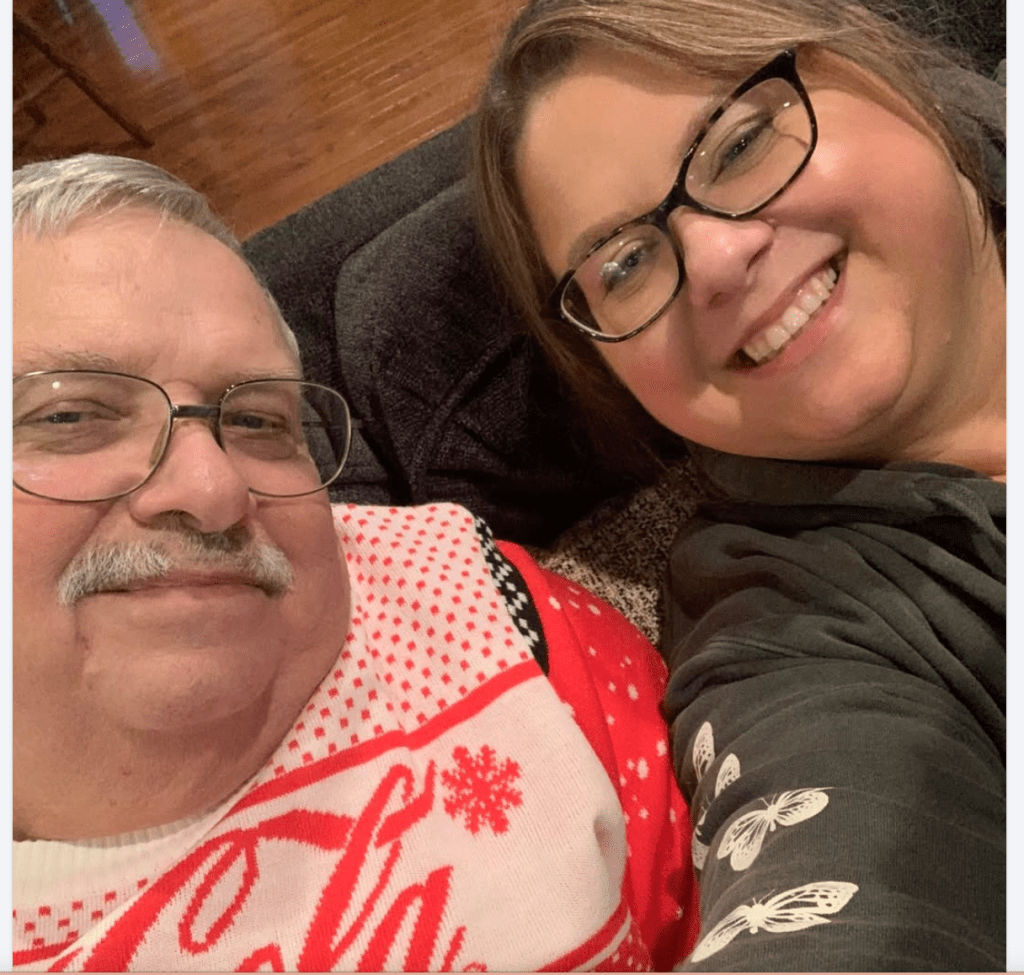
This post is dedicated to my Dad, Ron Spoors. He was a father, Poppa, Grandpa, husband, soldier and proud Vietnam Veteran. He was loved well and he loved well. He will be missed.
Ronald Stuart Spoors
5/29/49 – 3/3/26
 Mental Health Mondays
Leave a comment